01
Consultation and fertility assessment
Your specialist reviews medical history, previous investigations and fertility goals. Tests may include ultrasound, selected blood tests and semen analysis.
Learn about fertility testingMMR HOSPITAL & IVF CENTER · RAIPUR
A clear, compassionate guide to in vitro fertilisation: how it works, what the treatment journey may involve and which questions to ask your fertility specialist.
An appointment enquiry is not a confirmed booking. The hospital will verify availability.

UNDERSTAND IVF
IVF is a fertility treatment in which eggs are collected from the ovaries and fertilised with sperm in a laboratory. If a suitable embryo develops, it may be transferred into the uterus. Other embryos may sometimes be frozen for future use.
IVF may be discussed after fertility testing or when certain medical factors make natural conception difficult. It is not the only option for every person or couple, and the decision should follow a personalised assessment.
THE IVF JOURNEY
A typical IVF journey may include these stages. Timelines, medicines and procedures vary according to your clinical needs.
Your specialist reviews medical history, previous investigations and fertility goals. Tests may include ultrasound, selected blood tests and semen analysis.
Learn about fertility testingMedicines may be prescribed to encourage several eggs to mature. Scans and, when appropriate, blood tests help the team monitor the response and adjust the plan.
Understanding female fertilityA clinician usually collects eggs through an ultrasound-guided procedure. The team explains anaesthesia or sedation, expected recovery and possible risks in advance.
Discuss the procedureEggs and sperm are brought together in an embryology laboratory, or ICSI may be considered for particular circumstances. Embryo development is then observed.
IVF and ICSI explainedIf there is a suitable embryo and transfer is clinically appropriate, an embryo may be placed in the uterus. Your specialist explains the number of embryos, timing and alternatives.
Understand embryo freezingThe team advises when to take a pregnancy test and what happens next, whether the result is positive or negative. Some embryos may be eligible for freezing.
Plan your follow-up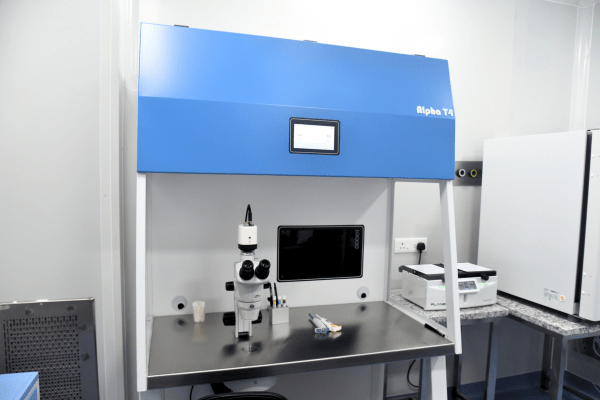
CARE WITH CLARITY
Before you decide, you should know what the team is recommending, why it may suit your circumstances and what would happen if the result is different from what you hope.
INFORMED DECISIONS
Your medical team can help you weigh potential benefits, uncertainty, risks and personal preferences.
IVF may be considered for different fertility concerns. Age, ovulation, fallopian-tube health, sperm factors, prior treatment and personal circumstances can affect the discussion.
No treatment guarantees pregnancy or live birth. Age at egg collection, the reason for infertility, embryo factors and overall medical circumstances are important considerations.
Discuss ovarian hyperstimulation syndrome (OHSS), side effects, complications of egg collection, ectopic pregnancy and multiple pregnancy risk before treatment.
Treatment can be physically and emotionally demanding. Ask about counselling, time off, support people, medication questions and what to do if a cycle does not succeed.
After fertility medicines or procedures, seek urgent medical help for severe or worsening abdominal pain, breathing difficulty, chest pain, feeling faint or signs of dehydration. Follow your own clinical team's safety instructions.
PLAN WITH CONFIDENCE
Actual treatment fees depend on the care plan and the services provided. Rather than relying on an unverified package price, ask the hospital for a written, itemised estimate.
Enquire about your treatment planSpecialist appointments, ultrasound scans and any diagnostic or laboratory tests.
Stimulation medicines, injections and follow-up scans or blood tests.
Egg collection, fertilisation, embryo culture, transfer and any individually indicated technique.
If appropriate, discuss freezing, storage, future transfers and extra services separately.
If additional tests or treatment add-ons are suggested, ask whether they are medically necessary, what evidence supports them, and what extra charges apply.
YOUR QUESTIONS MATTER
Simple answers can make a treatment discussion feel clearer. Your clinician can explain which details apply to you.
Contact MMR HospitalIn vitro fertilisation (IVF) is a fertility treatment in which eggs are collected and fertilised with sperm outside the body. If a suitable embryo develops, a clinician may transfer it into the uterus. The exact plan depends on an individual assessment.
An IVF cycle generally takes several weeks, but the schedule depends on your treatment protocol, ovarian response, laboratory work and whether transfer takes place in the same cycle. Ask your treating team for your personal timeline.
During conventional IVF, eggs and sperm are placed together in the laboratory. ICSI is a technique in which an embryologist injects one sperm directly into an egg. ICSI may be considered for some sperm-related or other specific clinical reasons; it is not necessary for every patient.
No. Fertilisation, embryo development, implantation, pregnancy and live birth are separate steps, and none is guaranteed. A specialist can discuss realistic chances in the context of your age, investigations, medical history and proposed plan.
Transferring more than one embryo raises the chance of a multiple pregnancy, which carries additional health risks. Your clinician should discuss whether a single embryo transfer is appropriate in your circumstances.
Possible risks include ovarian hyperstimulation syndrome (OHSS), side effects of medicines, complications of egg collection, ectopic pregnancy and multiple pregnancy. Seek urgent medical help for severe or rapidly worsening symptoms, especially breathing difficulty, chest pain or significant abdominal pain.
Ask for an itemised explanation of consultations, tests, medicines, scans, egg collection, laboratory work, embryo transfer and any possible extra costs such as ICSI, freezing, storage or future embryo transfers. Confirm the scope and exclusions with the hospital.
Use the fertility consultation enquiry link or call the hospital. Enquiries are not automatically confirmed appointments; the hospital team should confirm your doctor and appointment availability.
TAKE THE NEXT STEP
Speak with MMR Hospital & IVF Center in Raipur about consultation availability, initial testing and what to bring to your visit.