
Look for persistence
CKD generally means a change in kidney structure or function that lasts for at least three months and has implications for health.
KIDNEY HEALTH EDUCATION · MMR HOSPITAL, RAIPUR
CKD is often quiet in its early stages. Learn how doctors consider kidney test results, what long-term changes may mean and which questions to bring to a nephrology consultation.
Educational information only. A lab result or web article cannot diagnose your condition.
क्रोनिक किडनी रोग की जानकारी हिंदी में ↗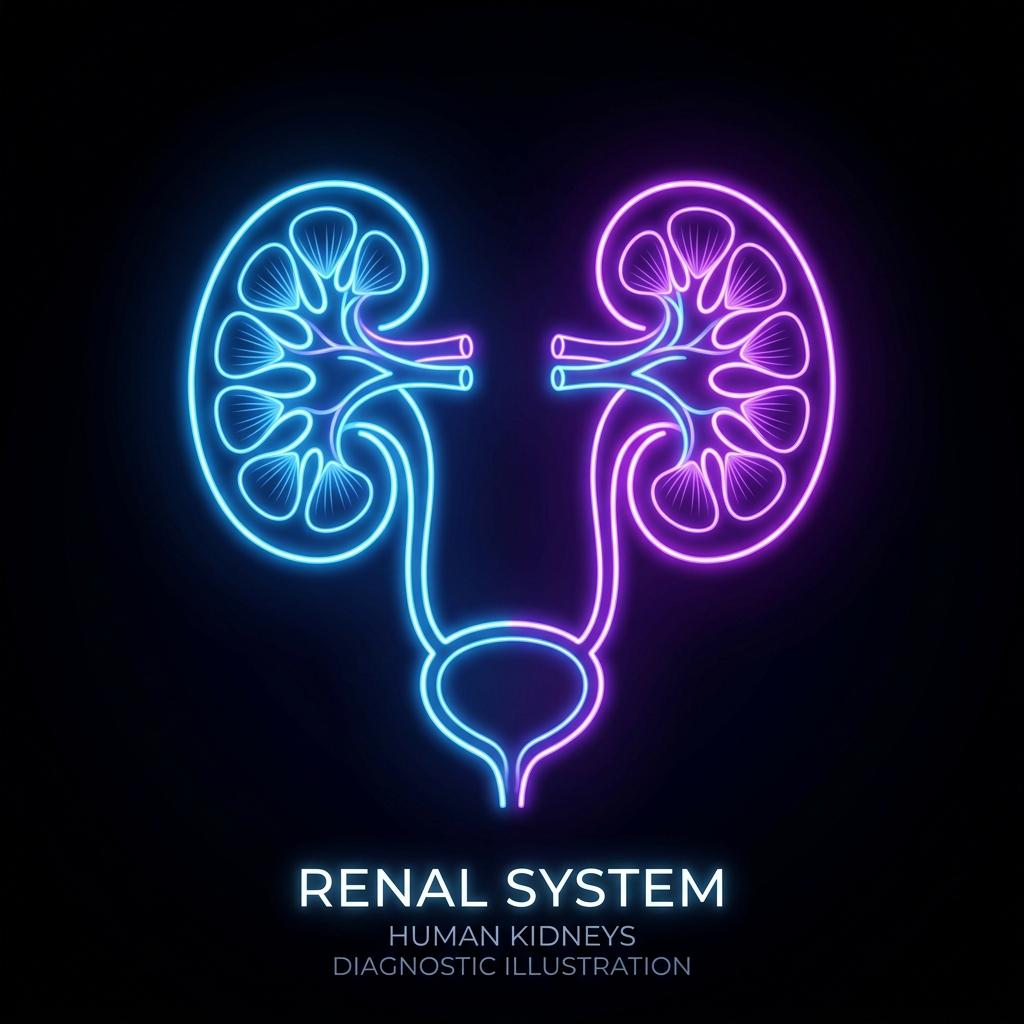 Illustration for kidney health education
01 / UNDERSTANDING CKD
Clinical guidelines define chronic kidney disease as abnormalities of kidney structure or function present for at least three months that affect health. This may include persistently reduced filtration or evidence of kidney damage, such as albumin in the urine.
An isolated high creatinine result or low eGFR does not automatically establish CKD. Your clinician can consider older results, repeated tests, recent illness and other evidence.
CKD generally means a change in kidney structure or function that lasts for at least three months and has implications for health.
Estimated GFR and urine albumin help clinicians assess kidney health; trends and other findings matter alongside any one result.
Diabetes, high blood pressure and several other conditions can affect kidney health. Assessment is tailored to the individual.
02 / REASONS TO ASK ABOUT TESTING
Risk is personal. Diabetes, high blood pressure, relevant family history and prior kidney conditions are common reasons to discuss suitable testing.
Ask how often kidney filtration and urine albumin should be checked.
Discuss blood-pressure control and kidney monitoring with your clinician.
Bring earlier kidney results, scans or hospital notes to your appointment.
Changes in urination, swelling or unexpected test results deserve appropriate assessment.
03 / TESTS EXPLAINED
Both kidney filtration and signs of kidney damage are important. Clinicians decide whether and when to repeat measurements.
An estimate of filtration calculated using a blood test such as creatinine. It is not a complete diagnosis on its own.
A urine albumin-to-creatinine ratio helps detect albumin leakage; unexpected results may need repeat testing.
Blood pressure, diabetes status, medicines, previous measurements and sometimes imaging help the clinician interpret results.
04 / UNDERSTANDING eGFR CATEGORIES
These KDIGO categories are expressed in mL/min/1.73 m². CKD assessment also considers its cause and urine albumin category (A1–A3). G1 or G2 alone does not mean a person has CKD.
Important: Do not interpret a stage without albuminuria, previous results and your clinician's assessment. The table is not an online diagnosis or dialysis decision tool.
05 / DISCUSSING A CARE PLAN
Care depends on the cause of kidney changes, other conditions, medicines and patient preferences.
If you have diabetes or high blood pressure, ask your care team about suitable targets and follow-up.
Tell the doctor about all prescription, over-the-counter and herbal products. Do not start or stop treatment based on a webpage.
A kidney diet differs with CKD stage, test results and other conditions; broad restrictions are not appropriate for everyone.
The doctor may repeat kidney and urine tests to assess trends and clarify whether changes are persistent.
Some patients need conversations about dialysis or other advanced kidney care; an eGFR result alone does not determine this.
Ask what to monitor, which symptoms require earlier assessment and when the next review should happen.
SAFETY FIRST
Severe breathlessness, chest pain, confusion, very little urine or rapidly worsening illness can need urgent medical attention. Seek appropriate emergency care promptly rather than waiting for a website reply.

YOUR NEPHROLOGY SPECIALIST
Dr Prawash Chowdhary has a documented nephrology background and co-authored research on kidney disease in Central India. His 2025 FISN recognition can be checked with the International Society of Nephrology.
Ask about assessment and next steps; the doctor and hospital team must confirm which services and times are available.
06 / PATIENT QUESTIONS
Answers are educational and cannot replace the advice of a treating clinician.
No. Creatinine is one factor used to estimate kidney filtration. CKD is usually assessed from abnormalities lasting at least three months, with the person's history and other evidence. A single unusual result may have other explanations.
Yes. Earlier stages may cause few or no noticeable symptoms. People at higher risk, including those with diabetes or high blood pressure, can discuss suitable testing with a clinician.
eGFR estimates kidney filtration. A urine albumin-to-creatinine ratio (uACR) checks albumin in urine. Both can help clinicians understand kidney health and risk when considered together.
Not necessarily. KDIGO G1 or G2 categories do not, on their own, establish CKD without other evidence of kidney damage. Age, measurement changes and clinical context matter.
No. Dialysis is not needed by everyone with CKD, and starting it is not decided by a single lab number. A specialist considers symptoms, complications, kidney function, patient preferences and available options.
You can enquire about a kidney consultation at MMR Hospital, Raipur. Keep previous kidney tests, urine reports, medicines and questions ready. An enquiry is not a confirmed appointment.
Guideline and educational resources used to prepare this page. The content requires MMR clinician approval before publication.
MMR HOSPITAL & IVF CENTER · RAIPUR
Contact the team for a specialist consultation enquiry. The hospital must confirm doctor availability and appointment details.